

Baseball Toaster was a collection of blogs by a group of friends who love baseball and enjoy writing about it.
Baseball Toaster was unplugged on February 4, 2009.
To produce a mighty book, you must choose a mighty theme. No great and enduring volume can ever be written on the flea, though many there be that have tried it.
-- Herman Melville
This blog entry is my white whale. It has been my nemesis since the genesis of this blog. I have never been able to tame it or capture it. My goal in starting the Catfish Stew blog was not, like so many other baseball blogs, to second-guess The Management, but to express what it feels like to be an Oakland A's fan. If I have failed as a blogger, it is because I lacked the willpower to bring myself to tell this story, to confront the core pain of my mission. Would Herman Melville have succeeded if he had tried to write his masterpiece without ever once mentioning Ahab's peg leg, the scar that drives his obsession? If you face the Truth, it hurts you; but if you look away, it punishes you.
Load the harpoons, gentlemen, it is showdown time. Today, my adventure as a baseball blogger ends. I'm going down, and I'm taking Moby Dick with me.
If you've been paying attention lately, you've noticed that Baseball Toaster has had a bunch of its knobs and switches and dials and wires fall off in recent months. Today, with the largest part of our engine leaving to join the Los Angeles Times, we are officially sending the Toaster to the scrap heap.
We'll leave the casing intact--the archives for the blogs that are not being redirected elsewhere will remain online here indefinitely. But after tomorrow, we will cease publishing new blog entries. A few days after that, we will close up comments. The Toaster will then be left here, frozen in time, a snapshot of an era that has passed, until it one day finally rusts away.
The cliches that baseball players spew when they retire are all true and appropriate here. Thanks to all my teammates. Thanks to the fans. We've been through deaths and births and triumphs and disappointments together--you've been like a family to me. The only thing I can think to say that would differ from a typical sports retirement speech is, "Bite me, Russian spammers."
Here's a list of where the Toastmasters are scattering to:
New locations (Updated 17 Dec 2011)
New blogs, but not just sports
Reply hazy, try again
Tearful retirement speeches
Yes, I am retiring from baseball blogging, as well. But not before I post one final, epic, monster-sized (so large I had to alter my database structure to accomodate it) Catfish Stew blog entry on Wednesday, my 43rd birthday. I'm going to get it all off my chest, leave it all on the table, use up all my fuel, and then I'll have nothing left to say or do but send myself off to the junkyard, anyway. It will be the last post here on Baseball Toaster.
After that...see you around.
It hurts, any time you lose something you care about, something that's been a part of your life for years. It hurts, any time you watch as a community you love slowly fades away, as much by your own doing as anyone else's. You flog yourself with notes of things unwritten, things unsaid, with thoughts of what could have come to pass, with dreams of success left unfulfilled, and it hurts even more. But such is the way of the world.
* * * *
The Toaster's shutting down today, but Cub Town has been dead for quite some time. I joined Cub Town at scarcely 18 years old, bustling with enthusiasm for blogging about the Cubs. But sometime between then and now, the enthusiasm faded, though my support for the team never did. Blogging the daily minutiae of the team, which consumed most of my evenings in high school, lost its appeal.
I could diverge here and try to sort out exactly why my passion for that kind of writing dwindled, but that's of interest to no one, not even me. Try as I did, I could never get back to into it, which filled me with much angst for a time. But I've moved on...
* * * *
You see, I've got a very exciting project in the works. Exciting to me, anyway. It's not yet ready to be officially announced, but when it is, word should get around. And you'll see just what kind of writing I'm interested in these days.
* * * *
To close this final Cub Town post, I must offer my thanks: First, to Derek Smart, for asking me to join the finest group of writers I've ever been involved with; second, to Ken Arneson, for making this site possible; third, to the rest of the Toastmasters, for making me feel so welcome; and finally, to the readers, who make it all worthwhile. Thanks for everything.
And into the black we go...
Because I'm retaining Scott Boras
I'll hold out, and not join the chorus
With new homes online.
If you want me to sign,
Bid a mil and a golden thesaurus.
(Go to nsfwsports.com if you want to find Scott's new blog site.)
This is the last post at the Juice Blog. I have had a great time interacting with the readers of the site and I'm glad that most have come around to the original idea of the site by Will Carroll and myself. A baseball blog that would discuss pop culture, politics, and the rest of the sports world.
Let me mention again how much I appreciate Will Carroll for asking me to join him at his blog way back in 2004. Will is a one of the most interesting and talented people I've ever met. Considering I'm in a business that is supposedly filled with interesting and talented people, I don't throw compliments like that out randomly. With our busy lives, I don't see or even speak to Will as much as I would like, but I still consider him one of my best friends.
Towards the end of 2008 I discussed with the Toastermaster General, Ken Arneson, about how I was ready to go in a different direction with this blog. The idea I had was to go off on my own, as the new direction didn't fit with the way the Toaster operated. Ken shared with me that the timing for my new project was good, as the chances of the Toaster site continuing were slim. I want to thank Ken for all his efforts in putting the Toaster together. He has been great to work with and I will miss his technical skills. (Oh and by the way, Ken is really an underrated writer. I hope he comes out of retirement from blogging soon.)
While I'm on the subject, I've been very proud to be part of the great writers who have contributed to the Toaster. While many of us will continue to thrive at our new sites, it is a sad day for baseball fans on the net, as there was no other site that had as many quality writers blogging on baseball. I think the top 2 baseball blogging communities are Dodger Thoughts and Bronx Banter. It was cool that they were both located at the Toaster, which brought an East Coast/West Coast interaction at the Juice Blog that we couldn't have gotten anywhere else. Was Belth Biggie Smalls and Weisman Tupac? I will let you be the judge, but it's good that there was no gunfire.
As I outlined at the start of the year, I have a new site called NSFWSports.com. Having Not Safe for Work in the title points to the blog being R-rated. Specifically the idea is to cover sports and pop culture in an edgy and provacative way. I plan on being much more active at the site than I've been here, lately, as I believe the uncensored freedom I have at my new site will give me a newfound creative burst. Take a look at my latest post on how the Super Bowl featured 2 teams that weren't super bowl quality. As I mentioned, it uses bad words and some very naughty links that I use as provacative jokes.
While some individual facets of what I'm trying to do over at NSFWSports.com you will recognize, I don't think the overall product will be like any other site on the web. That at least is the plan going into it. I can't stress enough how much I hope you bookmark NSFWSports.com and participate in the dialogue that comes out of my new offerings.
(Final Note: If you want to get a hold of me, feel free to email me at scott@scottlongonline.com)
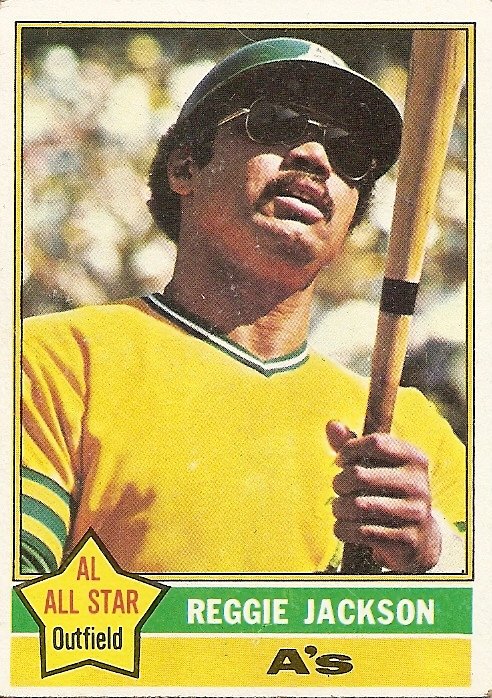
A god stands in a moment of contemplative reflection. Shadows give way to sun as he readies to move into the center of attention, that bright stage he was born to command. Behind him, the faces in the crowd that will watch his every move have been blurred to something like Monet's lily pads, those hypnotic omens of the inevitable dusk into which we'll all dissolve, as if the card was meant to whisper that all names, even those of the greatest among us, will eventually unravel to silence. In fact, the whole card aches with transience: by the time it thrummed in the palms of the boys of America the superduperstar had moved on, traded to Baltimore, the regal joy of the card’s blazing gold uniform a lie. The most magnificent team of the Cardboard God era became an empty golden shell for the remainder of my childhood.
***
Time dismantles. If the Oakland A’s of the early 1970s couldn’t hold together, what chance do the rest of us have? Indeed, the very platform upon which these words stand is eroding. In other words, Baseball Toaster is coming to an end, all its pieces scattering or dissolving.
I enjoyed it while it lasted, and as my farewell I’m sending Reggie to the plate for my last at-bat here. This is partly because even I, who grew to despise Reggie when he became the self-professed, self-aggrandizing straw that stirred the drink that was the hated Yankees, know that no one was ever better suited for the final at-bat. It’s also partly because I know he’s the favorite player of the straw that stirred the drink of Baseball Toaster, creator Ken Arneson. Unlike Reggie, who seemed to prefer the solo spotlight, Ken is a great believer in the benefits of a chorus of voices. It was the communal effort I enjoyed the most here, and by that I mean not only the feeling of being a part of a team of bloggers but of being part of a wider community of thoughtful, baseball-savvy conversationalists. Last April, Ken spoke to the benefits of that kind of pluralistic exchange of ideas when he offered these thoughts in a comment on a Dodger Thoughts post about the growing divide between old-school newspaper writers and bloggers:
Blog entries are links in a chain. The unit of measurement in blogging is not the article, the unit of measurement is the conversation. . . The picture is painted by everyone who participates in the conversation, across multiple comments and blog entries and blogs. Believe me, if you say something wrong on the web, you will be corrected. Yes, it’s a messy process full of noise, but it also is a process that leads, in the end, to a more complete and accurate picture of the issues than the voice of just one person, no matter how talented.
I hope that the communal feel that has surrounded my forays into the past here at Baseball Toaster continues at the new home of Cardboard Gods. I know I’ll keep trying to fight time’s relentless dismantling, but as Ken implies, one voice can only do so much.
***
Time dismantles; voices come together. I knew this by the time I first held this card in my hands, in 1976, when I was eight. The year before, I had attended my first major league baseball game, at Fenway Park in Boston, the Red Sox hosting the A’s. You would think such a seminal moment would remain forever vivid in my mind, but because time dismantles I can only remember two things. The first is that I was amazed by my initial view of the glowing green field when we came up the runway to our seats in right field. The second is Reggie. A certain sense of excitement surrounded him throughout the game, and finally, late, the sky darkening and the huge blinding banks of artificial lights flooding the field in something brighter than day, the crowd’s excitement turned to caustic, resentful awe. I can’t even remember what exactly he did in the game’s waning moments to defeat the beloved local nine but I remember the way the crowd reacted. A throng ten times the size of my Vermont town prayed together in anger and disappointment and secret grudging wonder to one strutting spectacular god.
All good things come to an end. So too is this blog. You can judge for yourself whether or not the second sentence is a subset of the first.
It's been a lot of fun writing here with my small, but strangely devoted readership. I want to thank Ken and Jon for giving me the opportunity to write here and share with people what was on my mind. And surprisingly, few people ran in fear once they found what was inside.
The Cycle Patrol Office in Thief River Falls, Minnesota has been disbanded and its six employees were laid off. The catcher's interference alarm will ring only in my head (or that could be intermittent tinnitus.) When teams become mathematically eliminated from playoff contention in the 2009 season, you can come up with your own pithy metaphor for death.
I'll still be complaining about Russ Ortiz, Notre Dame, and the New York Times' irritating use of extraneous periods. It's just that most of you won't hear it. If you're looking for baseball news, I would suggest you bookmark ShysterBall. It's where I get my news from and Craig Calcaterra is a great and funny writer. And he is just as likely to drop in a Roman Hruska reference as me.
It was an honor to be associated with writers as good as those who were here. I'll leave the longer goodbyes to others.
Dodger Thoughts is moving.
I'm not a big drinker, but I always wanted to be a regular at a bar. I guess you could thank Cheers for that, although I think the dream transcends a single origin. The dream of belonging, of being recognized, of being heard, being appreciated.
One summer day in 2002, with fulfilling this dream being the farthest thing from my mind, I started talking in a tiny room to almost no one in particular. Talking to myself, mainly. Over the next year, I'd see people on the street and nod a hello, sharing a conversation every few weeks or so. I started to know folks around the block.
In 2004, I moved shop to a bigger neighborhood and, in a sense, opened the doors. One by one, visitors started to make their presence known. It was a time when a handful of guests still seemed like riches, and under no illusions that we amounted to anything significant, you could feel a warmth. At the end of July that year, those of us who were there bonded over what for us was a cataclysmic event. We bonded over a mutual, natural belief in seeing the light during an uncertain time.
The following year, I joined a smaller band of shopowners in yet another neighborhood, that to me has always felt a little less urban, a little more pastoral. A colony. It wasn't that life slowed down – if anything, it became exponentially busier. But we really flourished here. It has been a fecund setting, with utterly unexpected growth. Deep, personal friendships have sprung from conversations reminiscent of a endless late-night college dorm room, reminiscent of the bar of one's dreams.
And I'm not just a regular. I'm Sam Malone. It might seem arrogant for me to write that, but believe me, it feels humbling. Because without the good grace of my customers, I'd still be the guy talking to himself in the tiny room.
Perhaps it could be like this forever. I don't know. Part of me remains curious to find out. But there's another part of me that's ambitious. The part of me that has wanted things when I could only dream about them, now has a chance to go grab one of them.
Tonight, Dodger Thoughts is moving downtown, where it will begin being hosted at this link by the Los Angeles Times. (Imminently, www.dodgerthoughts.com will direct you there as well.) The dive bar is headed for CityWalk, and I can understand where a regular might find that notion disappointing or dispiriting. Dodger Thoughts was more than words, and even more than a community. Thanks to Baseball Toaster, Dodger Thoughts was a place.
But there's also something to be excited about, because for all that we might sacrifice in intimacy, we stand to gain something very important. Blogs have come a long way in the past seven years, from being something that nearly no one had heard of, to being a dirty word, to slowly being considered part of the solution rather than part of the problem.
The Times, for all its many struggles – just this past Friday saw the piling on of more - is still the biggest stage in Los Angeles, in California, in the West, and one of the biggest in the U.S. And I am eager for Dodger Thoughts to be on that stage, to bring something positive there. (As Michael Schneider noted today at Franklin Avenue, there is still reason to be invested in the Times.)
The bottom line is that I'll be writing about the Dodgers for the Times, and though it's a different Times than when I first had that dream 25 years ago, it's still meaningful to me.
Some enjoy Dodger Thoughts just because it's about the Dodgers, and that won't change. Others enjoy Dodger Thoughts for something more, something that represents the best potential of what online conversation in the 21st century can be. The idea of introducing more people to the community of Dodger Thoughts, I think, is worth risking the sanctity of the site for.
The bar is turning pro. I hope you'll all stay regulars.
* * *
There are two main transitions for the move to the Times to make note of.
One is the potential immediate introduction of a number of new commenters, which could bring something of a culture clash. As always, I hope you will use patience and consideration toward any new visitors – and for that matter, to any old ones. The Dodger Thoughts "Thank You for Not …" guidelines will still be in place, and an ongoing emphasis on these will go a long way.
The second issue will be more vexing for some. The Times requires all comments to be reviewed before they are made live. There will be multiple people behind-the-scenes with the ability to do this, so in many cases, the approval will come quickly. But at odd moments and in odd hours, there will be delays.
I assure you that no one is more concerned about this than I am, but I urge you to see this from a big picture. It shouldn't affect your enjoyment of other people's comments. They will all come. At Baseball Toaster, you never knew exactly when the next comment was coming, and so the Times will be no different.
As for your own comments, this will require a little more patience. The comments will come, and they will come in the order that they were made, and so in the end, though the flow might be more staccato, the substance of our conversations doesn't need to change.
For example, I've studied the quantity of comments that come in the wee hours, which are the ones that are going to most delayed, and it's a tiny percentage of what the site does overall. That can be a great time to comment, but in the end, if you find that your 2 a.m. comment doesn't appear until 5 a.m., just remember that when it does appear, it will get a wider readership, and that it's all part of a bigger plan. In any case, I ask for your patience as we work the kinks out.
(I'll still have my day job at Variety, in case you were wondering.)
* * *
I can't leave without thanking Ken Arneson for making Baseball Toaster possible, and for all the other Toaster writers for being so great to work alongside. It is really a strong feeling. We'll always have our Paris of the Internet.
For more information on the fate of Toaster, please go to Fairpole.
The Rockies signed Ubaldo Jimenez to a four-year, $10 million deal, one of those arbitration-avoidance specials that have become all the rage the past few years. It's little wonder when guys are getting $10 million for a single season in arbitration -- when they lose. Keenly Dan O'Dowd has managed to attach team options to the deal that could potentially keep Jimenez in Colorado past his first winter on the free agent market. If he can stay healthy. In the past, whenever the Rockies sign a young pitcher to a multiyear deal he has almost immediately gotten injured. Jimenez, who has inefficient mechanics and tends to react to adversity by throwing harder (which any veteran sinkerballer will tell you is pure foolishness), seems a good bet to hold true to form. If I had to quote odds, I would say the chances of his missing a half-season or more sometime during the length of this deal are rather more than 1 in 1. He'll definitely get hurt once, and he'll probably get hurt a second time.
Speaking of pitchers the Rockies extended who almost instantaneously become either ineffective or unable to pitch or both, Jeff Francis won't be able to make it for Opening Day this year. Oh well, little bother, neither will I. I decided to get rid of my Rockies tickets, which I've gotten every year since I moved to Colorado in 2005. I'm completely disgusted by the organization and their utter contempt for their fans. They didn't care enough to set it up so Rockies fans, instead of scalpers, would get the majority of the 2007 World Series tickets. The didn't even remotely make an effort of getting fair value, or in fact any value at all, for their perennial MVP candidate and face of the franchise. My '07 tickets came in a lovely embossed box with a useful tin and a wristwatch. My '08 seats, after the team had its best year ever and boosted season ticket sales hugely, came in a manila envelope with a cheap pin -- after they pushed me out of my aisle seat because somebody richer had sprung for a full-season plan. This organization doesn't deserve to succeed.
I'm not really fed up with just the Rockies, I think I'm just fed up with baseball. I've been watching a lot of basketball and even though my team (the Bulls) sucks out loud I feel like the NBA is delivering a vastly superior product to MLB right now. There are exciting players on nearly every team. Everybody is only one lucky draft pick or two lopsided trades away from contending. And the system is deliberately set up so that if a star player wants to bolt from the team he got his start with, he has to give up money to do so. LeBron James and Chris Bosh can flee Cleveland and Toronto if they want but they're going to have to sacrifice guaranteed years and guaranteed money to do so. I usually get both he MLB Extra Innings and the NBA League Pass cable packages but as part of my required belt-tightening this year I'm going to chuck the MLB. What's the point? The only five teams that matter are on ESPN constantly anyway. League Pass seems to present me with at least one and often two games I want to watch every night. Baseball? What's the point any more? To see the guys the Yankees are going to overpay in three years' time today? I don't want the Cubs to win any longer because it would make me, as an apostate, look pretty bad. And I know for a fact the Rockies aren't going to contend again so long as this ownership/management regime holds sway.
I do want to make a bit of a rational argument against the Rockies being any good this year, since I've read a few people chiding my pessimism in the comments. We've long since made the mental adjustment when it comes to individual Rockies players' stats, but sometimes we forget to correct for the team as a whole. Colorado was 8th in the National League in OPS last season. That's before any kind of park adjustment at all. So, with the assistance of the most skewed offense-creating stadium in the history of the major league game, they were able to be perfectly mediocre -- 8th of 16 teams. Looking to Baseball Prospectus's adjusted statistics, they don't take that much of a dip in pure rank -- they fall down to ninth going by VORP rather than OPS. But combine that with a pitching staff, last year ranked 14th in the league in VORP, that hasn't gotten any better, and the crippling loss of Matt Holliday and there's absolutely no two ways about it -- the 2009 Rockies are going to suck.
How good was Holliday last year? If you cut him in half down the middle, one half would have been the Rockies' best offensive player and the other would have been their second-best. People still have this weird idea that the Rockies have a good lineup because they play at Coors and they made it to the World Series, but it was pitching that drove the playoff run. Holliday at 61.7 VORP was the only excellent offensive player Colorado had; then you go down to Chris Iannetta, a very pleasant surprise at 30.3, Brad Hawpe, who still struggles against lefties, at 29.5, and then you plunge all the way down to Clint Barmes at 19.0. Sure, Willy Taveras (538 plate appearances for a sparkling 1.8 VORP) is gone and that's a boost in and of itself. But the fact of the matter is that to even be as good as they were last year (74 wins, in a terrible division) they're going to have to pull off an outright miracle to replace Holliday's production.
How on earth could that happen? Well, Dexter Fowler could pull a Freddy Lynn. O'Dowd might be able to find a taker for the rapidly diminishing Garrett Atkins so that Ian Stewart could play every day. Iannetta could get even better, although with a .390 OBP you'd have to think he's bumping up against his ceiling as it is. Troy Tulowitzki would have to have a big bounceback year offensively, although his numbers there from his rookie year weren't anything to write home about. They'd have to get a freaky, out-of-nowhere performance from somebody we haven't even considered yet.
Oh... and also Francis would have to come back quickly and be good, Aaron Cook would have to be as good or better than he was last year, the bullpen would have to not resemble an improperly dressed wound, Clint Hurdle would have to spontaneously develop the capacity for original thought, and absolutely nobody could get hurt. Oh, right, and Todd Helton has to decrease the rate of his ongoing decline dramatically.
Some of these things may happen. All of them will almost certainly not happen together. What's more, Colorado has had horrible Aprils three seasons in a row -- if they have yet another one and still don't fire anybody, my criticisms here will appear gentle. If O'Dowd goes, and I don't understand why he'd even want to stay in this horrible job when his owners fear success so much, a fire sale will probably follow, not that the Rockies really have a whole lot of assets to go around. It'd be cool to see Aaron Cook get to pitch in the playoffs for a real team after his missing out on the '07 run until it was literally all but over (he came back from injury to pitch Game 4 of the World Series). Taylor Buchholz is going to be pitching meaningful pressure innings somewhere eventually. Sadly, pretty much everybody the Rockies have to trade past Atkins would be perceived as a bench player or a platoon guy on one of those teams that tries to win.
I guess Huston Street's around. I keep forgetting about that. Even though Street is overrated and mostly coasting on name recognition by now, he's a player with a profile, and guys like that leave Denver, they don't come here. That's why I'm almost certain, nearly as certain as I am that the Rockies will lose 90 games this year, that Street will never throw a pitch in a Rockies uniform.
This may or may not be the last Bad Altitude post ever. If it is, you can read my ongoing TV and film writing (including my third year of "American Idol" handicapping) at this new page. Thanks to everybody who read, commented, e-mailed, and especially to Ken and the other Toaster-ers who gave me the opportunity to speak my mind.
Loyalty to petrified opinions never yet broke a chain or freed a human soul in this world—and never will.
—Inscription under Mark Twain's bust in the New York University Hall of Fame.
The Hall of Fame voting for 2009 is in the books, and the net result is that three new members will be greeted in the hallowed halls (or hall, actually) of Cooperstown: Rickey Henderson (a no-brainer), Jim Rice (in his last year of eligibility) and Joe Gordon (by the easier of the two bifurcated veterans committees).
Henderson was arguably the best player eligible not in Hall. It would be difficult to argue against that assertion given he is the all-time leader in stolen bases, times caught stealing, runs, and leadoff home runs (and walks when he retired) and he had 3000 hits and 535 Win Shares.
The only argument seemed to be how a handful of dolts could leave Rickey off their ballots. Henderson appeared on 511 of the 539 ballots cast or, rather, did not appear on 28 of them. However, his 94.81% voting percentage was twelfth all time and was just slightly ahead of Willie Mays, not such bad company after all. Also, Henderson was 106 votes above the number he needed for election (405). That's the five most votes over the number needed all-time (behind Ripken, Gwynn, Ryan, and Brett). Here are the top 15 Hall of Famers by voting percentage:
| PCT | Name | Yr | Votes | Needed | Diff |
| 98.84% | Tom Seaver | 1992 | 425 | 323 | 102 |
| 98.79% | Nolan Ryan | 1999 | 491 | 373 | 118 |
| 98.53% | Cal Ripken | 2007 | 537 | 409 | 128 |
| 98.23% | Ty Cobb | 1936 | 222 | 170 | 52 |
| 98.19% | George Brett | 1999 | 488 | 373 | 115 |
| 97.83% | Hank Aaron | 1982 | 406 | 312 | 94 |
| 97.61% | Tony Gwynn | 2007 | 532 | 409 | 123 |
| 96.52% | Mike Schmidt | 1995 | 444 | 345 | 99 |
| 96.42% | Johnny Bench | 1989 | 431 | 336 | 95 |
| 95.82% | Steve Carlton | 1994 | 436 | 342 | 94 |
| 95.13% | Babe Ruth | 1936 | 215 | 170 | 45 |
| 94.81% | Rickey Henderson | 2009 | 511 | 405 | 106 |
| 94.68% | Willie Mays | 1979 | 409 | 324 | 85 |
| 94.63% | Carl Yastrzemski | 1989 | 423 | 336 | 87 |
| 93.75% | Bob Feller | 1962 | 150 | 120 | 30 |
Henderson is behind some players, even contemporaries, who were clearly inferior players though Hall of Famers all (Gwynn in particular seems unfair), but it's hard to gripe when you reach such (deservedly) rarified air.
The other two men who will be enshrined were far more controversial because of their selection, not omission. The argument against Rice starts with his being a sentimental pick given he was in the last year of eligibility (on the Baseball Writers ballot at least). Some have argued that he played in a hitter's park and didn't produce on the road. Some will say his career was too short, he was a defensive liability, and that he was a slug around the bases. Some (including me) would argue that his teammate and follow outfielder Dwight Evans was a better player and he fell of the ballot years ago.
As Rob Neyer most acerbically put it, "[W]e can simply add him to the list of good players -- Bruce Sutter, Catfish Hunter and Orlando Cepeda come to mind -- who don't really belong in the Hall of Fame but are there anyway…[T]he election of Rice will do little to lower the standards of the institution, as it's unlikely that players like Dave Parker, Albert Belle, Dick Allen and big Frank Howard now will be knocking on the Coop's door (even though, it should be said, all of them were at least Rice's equal)." To quote Tina Fey, "Cat sound!" Wow, Albert Belle is a hard case to make, but luckily for Neyer, he rarely deigns to make it. And what? No mention of the execrable choices like Tommy McCarthy or the spate of other Veterans Committee choices? (More on Joe Gordon later)
There are valid arguments in there. Clearly, Rice was not a first ballot-type candidate, but the question remains as to whether he was a viable candidate for enshrinement. Like Mr. Owl, let's find out…
First, as a thumb rule (and a thumb rule only) where does Rice fall in the career Win Shares list for eligible players who are not in the Hall as of 2009? Henderson comes in first, nearly 150 Win Shares ahead of the next highest player with 535. Rice is tied for 69th with Boog Powell, a player who has more chance to land in the advertising hall of fame, at 282. Gordon is even lower tied at 155th at 242 Win Shares (but as I said, more on him later).
Next, we can look at some of the standards that Mssr. Neyer's mentor put together in his Hall of Fame book many years ago. These sorts of arguments are the ones that James cites ad nauseum to make a point in that work. The point is anyone can manipulate the facts to meet his opinion. James strove to set up some of independent set of tools to analyze candidates.
In addition, what makes Rice an ideal candidate for this treatment is that he is the perfect high-peak, short-career type player. James designed his tools to weight career milestones as well as single-season highlights.
Here are the results for all of the candidates on the 2009 BBWAA ballot. Note that I added one for meeting the criterion of average HoFer Win Share total (337):
| Name | First Year | Yrs Elig Left | Black Ink (Avg 40 P, 26 B) | >HOF Avg | Gray Ink (Avg 185 P, 144 B) | >HOF Avg | HOF Standard (Avg 50) | >HOF Avg | HOF Monitor (Likely >100) | Likely HOF? | # Similar in Hall | Sim Elig? | Similar in Hall >50% | Win Shares | > HOF Avg (336.89) | % Passed |
| Bert Blyleven | 1999 | 5 | 16 | No | 239 | Yes | 50.0 | Yes | 120.5 | Yes | 8 | 10 | Yes | 339 | Yes | 83% |
| Andre Dawson | 2002 | 8 | 11 | No | 164 | Yes | 43.7 | No | 118.0 | Yes | 5 | 8 | Yes | 340 | Yes | 67% |
| Tommy John | 1995 | 1 | 8 | No | 137 | No | 44.0 | No | 111.0 | Yes | 7 | 10 | Yes | 289 | No | 33% |
| Don Mattingly | 2001 | 7 | 23 | No | 111 | No | 34.1 | No | 133.5 | Yes | 2 | 7 | No | 263 | No | 17% |
| Jack Morris | 2000 | 6 | 20 | No | 190 | Yes | 39.0 | No | 122.5 | Yes | 6 | 8 | Yes | 225 | No | 50% |
| Dale Murphy | 1999 | 5 | 31 | Yes | 147 | Yes | 34.3 | No | 115.5 | Yes | 1 | 8 | No | 294 | No | 50% |
| Dave Parker | 1997 | 3 | 26 | No | 145 | Yes | 41.1 | No | 125.5 | Yes | 2 | 8 | No | 327 | No | 33% |
| Jim Rice | 1995 | 1 | 33 | Yes | 176 | Yes | 42.9 | No | 146.5 | Yes | 4 | 6 | Yes | 282 | No | 67% |
| Lee Smith | 2003 | 9 | 12 | No | 48 | No | 13.0 | No | 136.0 | Yes | 1 | 5 | No | 198 | No | 17% |
| Alan Trammell | 2002 | 8 | 0 | No | 48 | No | 40.4 | No | 118.5 | Yes | 1 | 5 | No | 318 | No | 17% |
| Mark McGwire | 2007 | 13 | 36 | Yes | 110 | No | 42.0 | No | 169.5 | Yes | 2 | 4 | Yes | 343 | Yes | 67% |
| Harold Baines | 2007 | 13 | 3 | No | 40 | No | 43.5 | No | 66.5 | No | 3 | 8 | No | 307 | No | 0% |
| Rickey Henderson | 2009 | 15 | 50 | Yes | 143 | No | 52.6 | Yes | 183.5 | Yes | 5 | 8 | Yes | 535 | Yes | 83% |
| Tim Raines | 2008 | 14 | 20 | No | 114 | No | 46.6 | No | 89.5 | No | 4 | 7 | Yes | 390 | Yes | 33% |
| Mark Grace | 2009 | 15 | 3 | No | 86 | No | 38.0 | No | 60.5 | No | 1 | 9 | No | 294 | No | 0% |
| Matt Williams | 2009 | 15 | 8 | No | 58 | No | 29.4 | No | 70.0 | No | 1 | 9 | No | 241 | No | 0% |
| Mo Vaughn | 2009 | 15 | 4 | No | 78 | No | 29.9 | No | 86.5 | No | 0 | 5 | No | 200 | No | 0% |
| Jay Bell | 2009 | 15 | 0 | No | 32 | No | 26.9 | No | 30.5 | No | 0 | 8 | No | 245 | No | 0% |
| Jesse Orosco | 2009 | 15 | 1 | No | 17 | No | 13.0 | No | 62.0 | No | 0 | 8 | No | 140 | No | 0% |
| David Cone | 2009 | 15 | 19 | No | 165 | No | 39.0 | No | 103.0 | Yes | 2 | 9 | No | 205 | No | 17% |
| Ron Gant | 2009 | 15 | 0 | No | 52 | No | 26.0 | No | 41.5 | No | 0 | 6 | No | 206 | No | 0% |
| Greg Vaughn | 2009 | 15 | 0 | No | 22 | No | 25.0 | No | 50.0 | No | 0 | 8 | No | 199 | No | 0% |
| Dan Plesac | 2009 | 15 | 0 | No | 17 | No | 8.0 | No | 54.0 | No | 0 | 7 | No | 113 | No | 0% |
Note that Henderson and Bert Blyleven are "best" candidates by this method, meeting 83% of the criteria. Anyone who is familiar with ERA+ is already on the Blyleven bandwagon, so I will let that dog lie. However, the next set at 67% is comprised of Rice along with Andre Dawson, another oft-dissed candidate, and Mark McGwire, who would be in the Hall (probably first ballot as well) if not for the steroid scandal.
The next tier, at 50%, is Jack Morris and Dale Murphy, two more highly controversial candidates. Unfortunately, Tim Raines, who ranks second in Win Shares among the BBWAA candidates and who is the one candidate that I would champion above all the rest (if I went in for such things), comes in at just 33% along with Tommy John and Dave Parker—and yet more controversy!
Are these tests conclusive? No, but it's a preferable approach to searching for facts to fit ones opinion. It puts all the candidates on the same level playing field.
Is Rice a HoFer? Apparently so according to the standards established for the Hall by the players yet far selected.
Is he the best candidate? No, but one could make an argument that he was a "good" choice. He is better than the 69th showing he put up in career Win Shares.
As for my personal opinion of Rice (for full disclosure), frankly, me dear, I don't give a damn. I considered Rice a great hitter in my youth, but clearly he was not as complete a player as, say, Henderson. He is a borderline candidate, so why not the Hall members make the decision based on their own makeup.
And before I get to Gordon, I should mention a number of phantoms who stayed only too briefly on the BBWAA ballot before falling into a pre-Vets Committee purgatory. There are a number of very good candidates that got short shrift from the writers. Some seemed like writer faves (like Will Clark) so maybe it's not just personality that causes the writers to overlook, or underlook, a candidate (e.g., the 28 missing votes for Henderson).
Of the top 25 eligible candidates not in the Hall based on career Win Shares, just eleven of them were on one of the various Hall ballots this year. Here they are:
| Rank | Win Shares | Name | Voted By | On Ballot? | Inducted? |
| 1 | 535 | Rickey Henderson | BBWAA | Y | Y |
| 2 | 399 | Tony Mullane | Veterans | ||
| 3 | 394 | Bill Dahlen | Veterans | Y | |
| 4 | 390 | Tim Raines | BBWAA | Y | |
| 5 | 363 | Darrell Evans | BBWAA | ||
| 6 | 358 | Rusty Staub | Veterans | ||
| 7 | 354 | Sherry Magee | Veterans | Y | |
| 8 | 351 | Lou Whitaker | BBWAA | ||
| 9 | 347 | Dwight Evans | BBWAA | ||
| 10 | 344 | George Van Haltren | Veterans | ||
| 11 | 343 | Mark McGwire | BBWAA | Y | |
| 12 | 342 | Dick Allen | Veterans | Y | |
| 13 | 340 | Andre Dawson | BBWAA | Y | |
| 14 | 339 | Jimmy Sheckard | Veterans | ||
| 14 | 339 | Bert Blyleven | BBWAA | Y | |
| 16 | 337 | Bob Caruthers | Veterans | ||
| 17 | 334 | Jim McCormick | Veterans | ||
| 18 | 331 | Will Clark | BBWAA | ||
| 19 | 329 | Bobby Grich | Veterans | ||
| 20 | 328 | Tommy Leach | Veterans | ||
| 21 | 327 | Dave Parker | BBWAA | Y | |
| 22 | 325 | Reggie Smith | Veterans | ||
| 23 | 324 | Ron Santo | Veterans | Y | |
| 24 | 322 | Willie Davis | Veterans | ||
| 25 | 321 | Vada Pinson | Veterans | Y | |
| 25 | 321 | Graig Nettles | Veterans |
So one could argue that not only are the best candidates not being picked, they do not even appear on any ballot. BBWAA candidates today either seem to take one of three routes: 1) quick election, usually in the first year, 2) life in limbo staying on the ballot until their time runs out, or 3) failing to get the requisite 5% vote to remain on the ballot and falling quickly into oblivion.
The five-percent rule is arbitrary and unfair. There are good many current Hall of Famers, for good or ill, who would never have made it to the Hall had they been dumped upon failing to reach this magic number. Newly minted HoFer Joe Gordon got just 1 vote in 251 ballots in his first year of eligibility, and did not exceed the magic 5% number for another nine. Before getting the necessary 75% this year, he never exceeded 29% in the 17 previous elections and runoffs (though to be fair, that includes one vote he received in 1945 when he was at war).
But I digress…perhaps using Win Shares alone is not the best way to gauge whether the best candidates are getting looked at by one of the ballots. As with Rice, we can look at the Bill James tests for each to determine his worthiness. Let's take a look at the eligible players no longer on the BBWAA ballot, either off the ballot altogether or shifted to one of the vets committees. Here they are sorted by Win Shares:
| Vets/ineligibles | Black Ink (Avg 40 P, 26 B) | >HOF Avg | Gray Ink (Avg 185 P, 144 B) | >HOF Avg | HOF Standard (Avg 50) | >HOF Avg | HOF Monitor (Likely >100) | Likely HOF? | # Similar in Hall | Similar in Hall >50% | Win Shares | > HOF Avg (336.89) | % Passed |
| Tony Mullane | 28 | No | 202 | Yes | 51.0 | Yes | 169.0 | Yes | 7 | Yes | 399 | Yes | 83% |
| Bill Dahlen | 4 | No | 96 | No | 44.9 | No | 78.5 | No | 7 | Yes | 394 | Yes | 33% |
| Darrell Evans | 8 | No | 82 | No | 40.3 | No | 42.0 | No | 2 | No | 363 | Yes | 17% |
| Rusty Staub | 4 | No | 89 | No | 38.2 | No | 58.0 | No | 2 | No | 358 | Yes | 17% |
| Sherry Magee | 35 | Yes | 210 | Yes | 35.0 | No | 60.5 | No | 2 | No | 354 | Yes | 50% |
| Lou Whitaker | 1 | No | 31 | No | 42.8 | No | 92.0 | No | 2 | No | 351 | Yes | 17% |
| Dwight Evans | 15 | No | 113 | No | 43.3 | No | 69.5 | No | 3 | No | 347 | Yes | 17% |
| George Van Haltren | 10 | No | 138 | No | 57.2 | Yes | 111.0 | Yes | 8 | Yes | 344 | Yes | 67% |
| Dick Allen | 27 | Yes | 159 | Yes | 38.7 | No | 99.0 | No | 0 | No | 342 | Yes | 50% |
| Jimmy Sheckard | 19 | No | 124 | No | 29.1 | No | 43.5 | No | 1 | No | 339 | Yes | 17% |
| Bob Caruthers | 27 | No | 159 | No | 65.0 | Yes | 174.0 | Yes | 3 | No | 337 | Yes | 50% |
| Jim McCormick | 40 | Yes | 220 | Yes | 51.0 | Yes | 184.5 | Yes | 4 | No | 334 | No | 67% |
| Will Clark | 13 | No | 94 | No | 42.0 | No | 83.5 | No | 1 | No | 331 | No | 0% |
| Bobby Grich | 8 | No | 40 | No | 31.7 | No | 42.0 | No | 0 | No | 329 | No | 0% |
| Tommy Leach | 11 | No | 114 | No | 25.7 | No | 27.5 | No | 3 | No | 328 | No | 0% |
| Reggie Smith | 4 | No | 124 | No | 34.7 | No | 63.0 | No | 0 | No | 325 | No | 0% |
| Ron Santo | 11 | No | 147 | Yes | 40.9 | No | 88.0 | No | 4 | No | 324 | No | 17% |
| Willie Davis | 2 | No | 64 | No | 27.5 | No | 39.5 | No | 0 | No | 322 | No | 0% |
| Graig Nettles | 4 | No | 56 | No | 30.8 | No | 63.0 | No | 3 | No | 321 | No | 0% |
| Vada Pinson | 18 | No | 135 | No | 36.3 | No | 95.0 | No | 2 | No | 321 | No | 0% |
| Jack Clark | 9 | No | 87 | No | 34.4 | No | 27.0 | No | 0 | No | 316 | No | 0% |
| Jimmy Ryan | 12 | No | 122 | No | 48.3 | No | 84.5 | No | 6 | Yes | 316 | No | 17% |
| Stan Hack | 11 | No | 125 | No | 37.9 | No | 76.0 | No | 2 | No | 316 | No | 0% |
| Ted Simmons | 0 | No | 95 | No | 44.5 | No | 125.0 | Yes | 4 | Yes | 315 | No | 33% |
| Norm Cash | 7 | No | 104 | No | 29.0 | No | 50.0 | No | 0 | No | 315 | No | 0% |
| Joe Torre | 12 | No | 71 | No | 39.9 | No | 96.0 | No | 5 | Yes | 315 | No | 17% |
| Jose Cruz | 3 | No | 71 | No | 27.7 | No | 27.0 | No | 0 | No | 313 | No | 0% |
| Willie Randolph | 2 | No | 39 | No | 32.9 | No | 92.0 | No | 3 | No | 312 | No | 0% |
| Keith Hernandez | 14 | No | 118 | No | 32.0 | No | 86.0 | No | 0 | No | 311 | No | 0% |
| Jimmy Wynn | 4 | No | 94 | No | 30.3 | No | 36.0 | No | 0 | No | 305 | No | 0% |
| Al Oliver | 16 | No | 127 | No | 40.3 | No | 116.5 | Yes | 4 | No | 305 | No | 17% |
| Ken Singleton | 1 | No | 69 | No | 30.4 | No | 38.0 | No | 0 | No | 302 | No | 0% |
| Bobby Bonds | 6 | No | 132 | No | 36.0 | No | 65.5 | No | 0 | No | 302 | No | 0% |
| Buddy Bell | 2 | No | 33 | No | 29.7 | No | 67.0 | No | 0 | No | 301 | No | 0% |
| Jim Kaat | 19 | No | 128 | No | 44.0 | No | 120.5 | Yes | 7 | Yes | 268 | No | 33% |
| Joe Gordon | 2 | No | 111 | No | 29.9 | No | 87.5 | No | 0 | No | 242 | No | 0% |
Using this method a strong argument could be made for antediluvian pitcher Tony Mullane, Sherry Magee, George Van Haltren, Dick Allen, Bob Caruthers, and Jim McCormick. Of these just Magee and Allen appeared on a ballot.
You will note in the comparison above that Joe Gordon does not meet one of the criteria, not one. There's not really any kind of coherent argument you could make for Gordon's election. He's about 100 Win Shares below the average Hall of Famer, had a remarkably short career—he was washed up by age 34 (though some credit should be given for his years lost to WWII), and had some very sub-par years mixed in even before his precipitous decline—1943, his last full season before the war, was execrable (79 OPS+!). Besides his peak was never all that great. His best OPS+ was an impressive but far from earth shattering 155, and his career average even with the quick hook was 120.
The best argument for Gordon's election is that the newly constantly revamped Veterans Committee had to pick a player before they were jettisoned for good. They had to split the vote down to pre-1943 and post-1942 before they could election someone. And Gordon's ballot consisted of just ten men with 12 voters. We are getting closer to Ted Williams cajoling a couple of minions into picking his old buddies like Dom Dimaggio, the kind of cronyism that the new Veterans Committee was supposed to stem.
To Be Continued…
In November of '02, I started Bronx Banter on Blogspot. The next year I took it to All-Baseball.com, and for the past four seasons, I've been with the crew at Baseball Toaster. It’s been a great run and a true honor to blog alongside the talent here. Now, Bronx Banter is moving again, this time to the SNY network of blogs.
The new address is www.bronxbanterblog.com.
The Banter writing crew, Cliff Corcoran, Bruce Markusen, Emma Span and Will Weiss, are all coming along, I retain complete editorial control, and the new spot will be poppin. Please jern us. Once again, I want to say what a great time we've had here at Toaster. Special thanks to Ken Arneson for making the transition a smooth one.
Thanks, and as Kane says:
Trade deadline season officially kicked off today with a head-scratcher of a blockbuster between Texas and Milwaukee.
The Rangers get: Carlos Lee; Nelson Cruz; PTBNL
The Brewers get: Kevin Mench; Laynce Nix; Francisco Cordero
On the surface, the deal makes no sense for either club. Texas adds offense they didn't particularly need, and weakens an already shallow bullpen to do it. Milwaukee trades their most marketable commodity for a not particularly cheap replacement bat and two reclamation projects, and gives up their most major-league-ready Triple-A hitter in the bargain. Neither team seemed to address their needs, unless "getting something for Lee before he becomes a free agent while paying lip service to the idea of staying in the Wild Card hunt" counts as a need.
On a pure talent level though, this looks like Doug Melvin got robbed blind. Cruz is two years younger than Mench and could probably do a fair job of replicating his numbers in the big leagues right now, which makes the trade approximately Lee for Nix and Cordero, plus who knows who that PTBNL will end up being. I have a really hard time believing Melvin couldn't have done better for Lee, even if he had to wait until after Alfonso Soriano got dealt to do it.
If Jon Daniels can follow this up with a trade to get some pitching (maybe by flipping Cruz?) the Rangers suddenly look very dangerous in the AL West. But then that would have been the case without this trade.
About the only people who should be smiling about this one are Kenny Williams and Brian Cashman, as it kept Lee out of the Twins' hands.